From a happy backyard outing to the emergency room with a serious medical situation on your hands - such is the deadly speed of a snake bite.
Australia is home to nearly 200 snake species, including 25 of the world’s most venomous. An estimated 6,000 dogs are bitten each year, with sporting breeds most at risk. Cats are less frequently affected, but incidents still occur at around a third of the rate*.
Antivenom has dramatically improved survival rates for both humans and pets. But timing is critical, and often, owners don’t even realise a bite has happened.
When these encounters can happen in local parks or even your backyard, awareness is everything. Their cuteness won't cover it.
SNAKE SEASON
In Australia, snake season typically begins at the end of winter, as snakes emerge in search of food and mates. According to PetSure claims data, incidents begin rising in September and October, peak in November and December, and taper off by May.
However, snake season is stretching longer each year. Attacks are now being reported as early as August and continuing well into May.
Even in cooler months, the risk doesn’t disappear. And while regional areas see the highest incidence, snake bites can occur anywhere in Australia.
The eastern brown snake is most commonly responsible for attacks on Australian pets, followed by the tiger snake and the red-bellied black snake.
Spring and summer also bring more outdoor activity. Pets, energised after winter, are more likely to roam, explore and wander into snake habitats — bushland, long grass or even that hedge you've been putting off trimming.
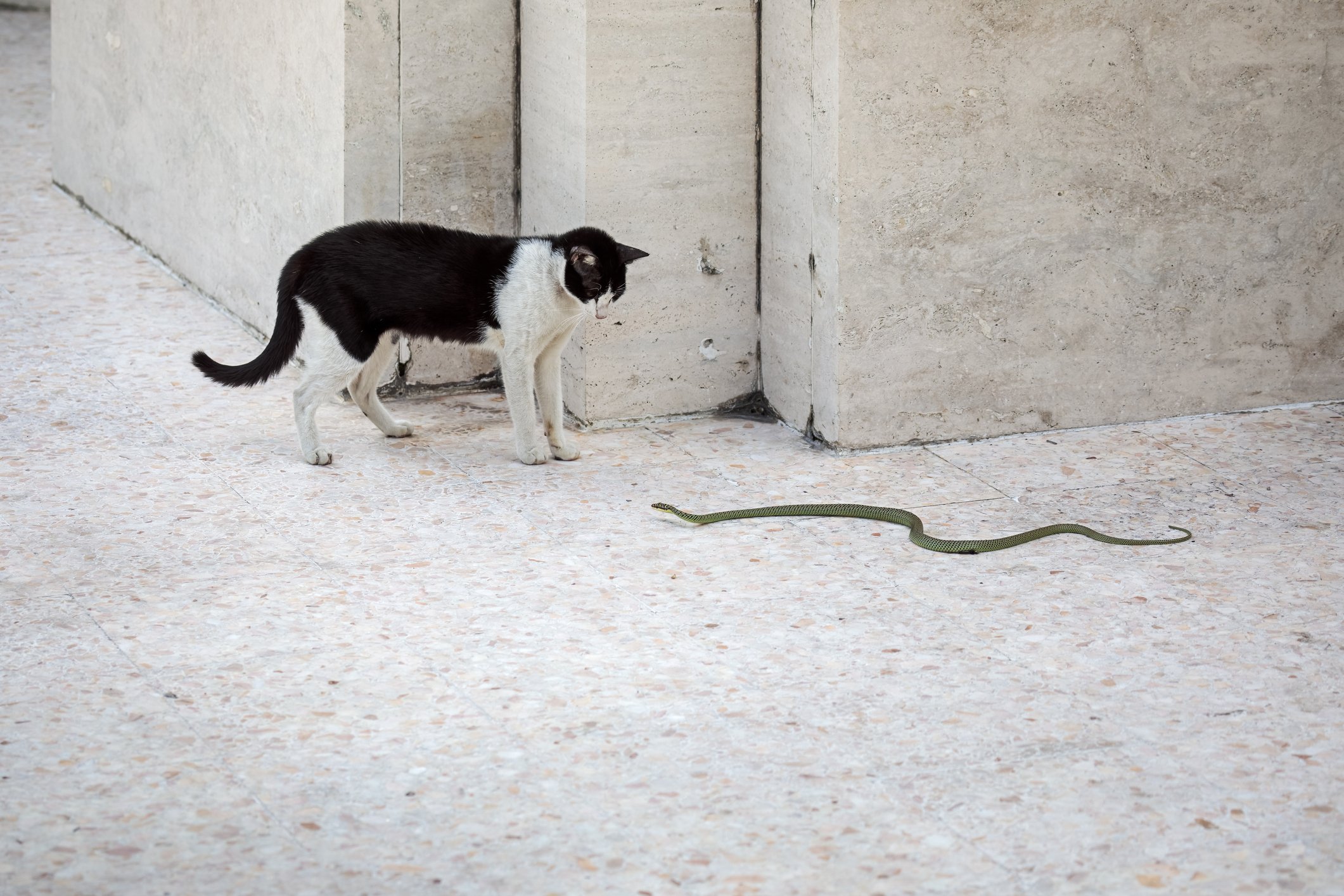
Behaviour plays a part too. Dogs may bark at or chase a snake. Cats? They stalk first and ask questions never. Neither recognises the danger, increasing the likelihood of a strike.
Environmental factors can also heighten risk. Floods, fires and heavy rain can displace snakes, pushing them into suburban areas. In these situations, snakes may be more defensive—and more likely to strike.
ACT FAST
When it comes to snake bites, hesitation is the real danger.
Recognising a bite isn't always straightforward. Bite marks can be small and easy to miss, and snakes rarely hang around. Even if you don't see it happen, suspicion alone is enough to act.
If you think your pet may have been bitten, watch for symptoms. These can appear within minutes - or take hours to develop:
- Progressive weakness or paralysis
- Dilated pupils
- Breathing difficulties
- Irregular heartbeat
- Muscle spasms
- Collapse or unsteadiness
- Vomiting
- Excessive bleeding
If any of these signs appear, seek veterinary care immediately.
COSTLY TREATMENT
If a snake bite is suspected, keep your pet as calm and still as possible. Movement can speed up the spread of venom.
If safe to do so, apply a firm bandage to the affected area and transport your pet to a vet immediately.
At the clinic, treatment typically involves antivenom, followed by close monitoring. If specialised equipment isn't available, your pet may be referred to an emergency facility. In severe cases, hospitalisation and supportive care—including oxygen or ventilation—may be required.
And yes, this can be costly.
In 2025, the average claim** for snake bite treatment was $2,447, with the highest amount claimed reaching $46,921* for severe cases. We ain't kitten.
WATCH OUT
Prevention is always the safer path, even if it's not always foolproof.
Australia might be snake territory, but there are practical steps you can take to reduce the risk to your cat:
- Keep it tidy. Snakes are less likely to settle in well-maintained yards with trimmed grass and minimal debris.
- Supervise outdoor time. Keep a close eye on pets, especially in snake-prone areas.
- Stick to clear, designated paths.
- Avoid long grass and dense vegetation.
It’s also important to know the signs of a snake bite and where your nearest veterinary clinic is located. In an emergency, every minute counts.
TAIL END
Snake bites are sudden, confronting and potentially fatal—but they are treatable, especially with fast action.
Snake season doesn’t have to keep you on edge. Stay aware. Know the signs. Have a plan. And know where your nearest vet is before you need them.
Because when snakes are about, being prepared gives your cat the best chance of staying safe.
*According to PetSure 2025 claims data
**Claims experience varies by circumstance and policy